
- What inspired you to address intimate health discussions among women?
As the founder of The Laser Beautique, I’ve always believed that what we do goes far beyond treatments. Every day, my team and I work in a very intimate space where women place an incredible amount of trust in us. They allow us into one of the most personal aspects of their lives, and that trust naturally creates genuine, long-term relationships.
I’ve found that when women feel safe, comfortable, and free from judgement, they begin opening up about concerns they’ve often kept to themselves. They ask questions about intimate health that they’ve been too embarrassed or unsure to ask anyone else. It made me realise just how much misinformation, stigma, and silence still surrounds women’s intimate wellness.
A big part of our role is education. We don’t just perform treatments -we explain why certain recommendations are important. For example, we advise clients not to schedule intimate treatments, particularly bikini laser hair removal, during their menstrual cycle or too close to it. Hormonal changes can make the skin significantly more sensitive, making the treatment less comfortable, and we also consider hygiene and the client’s overall comfort. These conversations often lead to broader discussions about the menstrual cycle, intimate health, and how different stages of a woman’s cycle can affect her body. It’s through these everyday interactions that we realised how valuable honest, evidence-based conversations can be.
As a healthcare professional and founder, I believe that trust comes with responsibility. If women feel comfortable enough to ask us these questions, we have a duty to provide them with accurate information, education, and a safe space where they feel heard. That is what inspired me to start having more open conversations about intimate health and to help normalise discussions that every woman deserves to have.
2. Why do you think many women struggle to talk about their intimate health?
I think many women struggle to talk about their intimate health because, for generations, these topics have been treated as private, embarrassing, or even taboo. Many of us were raised in homes where conversations about our bodies, menstruation, sexual health, or intimate wellness simply didn’t happen. In some families, parents felt uncomfortable having these discussions and expected schools to provide that education instead. While schools play an important role, they often can’t cover the emotional, practical, and personal aspects of intimate health in the way parents or trusted healthcare professionals can.
As a result, many women grow up feeling unsure about what’s normal, hesitant to ask questions, or worried about being judged. I’ve seen firsthand how, once women are given a safe, non-judgemental environment, they’re incredibly eager to learn and talk openly. That tells me the issue isn’t that women don’t want to have these conversations—it’s that many have never been given permission or the opportunity to have them.
- How can mothers play a role in educating their daughters about intimate health?
Mothers play one of the most important roles in shaping how their daughters view their bodies and intimate health. Open, honest conversations from a young age help normalise topics like puberty, menstruation, vaginal health, and body changes, rather than making them feel embarrassing or shameful.
The goal isn’t for mothers to have all the answers, but to create an environment where their daughters feel safe asking questions without fear of judgement. Those conversations build trust and confidence, and they teach young girls that taking care of their intimate health is just as important as looking after any other aspect of their wellbeing.
I also think it’s important for mothers to lead by example. When they speak openly about their own health, attend regular check-ups, and prioritise self-care, they show their daughters that these conversations are normal and that seeking advice or treatment when something doesn’t feel right is a sign of taking care of yourself, not something to be embarrassed about.
As a healthcare professional and founder of The Laser Beautique, I’ve met so many women who tell me they wish these conversations had happened earlier in their lives. When mothers start them at home, they can give their daughters the confidence and knowledge to make informed decisions about their health for years to come.
- What is BeauBalance, and how does it contribute to women’s intimate care?
BeauBalance is a gentle 2-in-1 intimate wash and shaving foam specially formulated to cleanse, refresh and protect the intimate area while maintaining its natural pH balance. Enriched with Aloe Vera, Cucumber Extract and Lactic Acid, it helps soothe sensitive skin, reduce dryness, calm razor irritation and minimise ingrown hairs. Suitable for daily use, BeauBalance supports intimate skin health while providing women with a simple, effective solution for both feminine hygiene and shaving.
We created BeauBalance not only because there was a demand for a product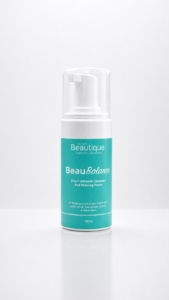 that truly supports intimate skin health, but also to help normalise conversations around women’s intimate health, hygiene and self-care. As laser hair removal specialists, many of our clients shave between treatments, so it’s important that they use products that are gentle, fragrance-free and pH-balanced to protect the skin, minimise irritation and support the intimate area’s natural microbiome. We believe these topics should be discussed openly, empowering women with the knowledge and confidence to care for their bodies without embarrassment or stigma.
- What message do you want to convey to women during Women’s Month?
One of the things I am most passionate about is women supporting women. Throughout my journey, I have learnt that success is rarely achieved alone. When we encourage, mentor and lift one another up instead of competing, we create opportunities not just for ourselves, but for future generations of women.